This website uses cookies to ensure you get the best experience. By clicking or navigating the site you agree to allow our collection of information through cookies. Check our Privacy policy.
The Quarantine Archives project brought together archivists and citizens in Belgium to document the COVID-19 pandemic with innovative digital approaches. Explore what the project achieved!
Title:
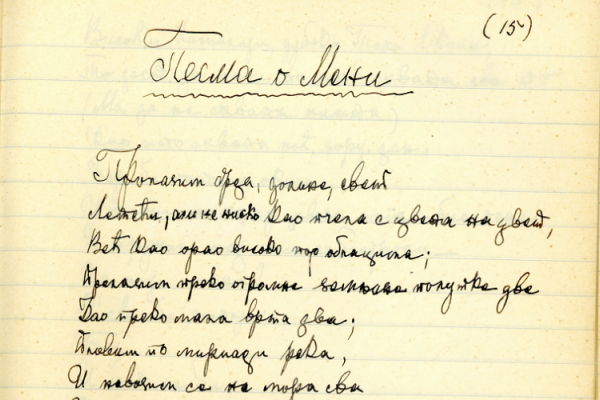
Detail from erses from the Poem of Myself by Jelena Dimitrijević, Collection of Recent Literary Manuscripts and Archival Material
Following our Pro news pieces marking Women’s History Month in March, we interview Beba Stankovic and Tamara Butigan from the National Library of Serbia about their ‘Being Woman in the Time of the Pandemic’ initiative.
In the early stages of the COVID-19 pandemic, the Europeana Foundation published some of its learnings and tips for working from home. Now, as we start to adapt to a new world of work, we share what we’ve done so far to develop a hybrid working culture for our organisation.
This handbook from Europeana Education and European Schoolnet showcases best practices and examples of digital learning during the pandemic. It provides a resource to help educators throughout Europe find innovative, ready-to-use educational material.
This position paper supports a consultation of the European Commission on the principles that should underpin Europe’s digital landscape and underlines elements that we believe are critical to realising the potential of digital cultural heritage for Europe’s future. It is a joint position from the Europeana Foundation, Europeana Network Association, and Europeana Aggregators’ Forum.
We are pleased to introduce Susan Hazan as the new Chair of the Europeana Network Association! In her first post in the role, she shares her thoughts on working boundaries and how we can all make efforts to set them.